
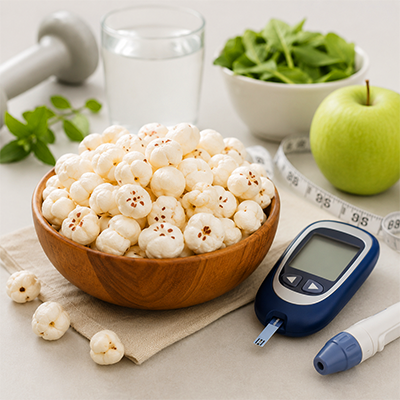
Description: Wondering if makhana is good for diabetics? Discover the glycemic index of fox nuts, how they affect blood sugar, and why roasted makhana makes a smart snack.
If you’re managing diabetes, snack time can feel like a minefield. One wrong choice and your blood sugar spikes before you even finish the bag. So it’s fair to ask: is makhana good for diabetics, or is it just another “healthy-sounding” snack that doesn’t hold up?
Here’s the short answer: yes, makhana for diabetes can be a genuinely smart choice, but the details matter, and we’re going to walk through all of them.
What Exactly Is Makhana?
Makhana, also known as fox nuts, comes from the seeds of the prickly water lily plant. It’s been a staple in Indian kitchens for centuries, usually roasted and lightly seasoned. Unlike fried snacks loaded with refined carbs and trans fats, makhana is naturally low in fat and calories, which already puts it ahead of most packaged options in your pantry.
But for someone managing diabetes, calories aren’t the main concern. The real question is what makhana for diabetes actually does to your blood sugar.
Makhana Glycemic Index: Where Does It Stand?
This is where makhana genuinely earns its reputation. The makhana glycemic index falls in the low to moderate range, generally estimated between 30 and 40, depending on how it’s prepared. For context, foods with a GI of 55 or below are considered low-GI and are less likely to cause sharp blood sugar spikes.
A few reasons makhana scores well on the makhana glycemic index scale:
- High resistant starch content: this type of starch digests slowly, so glucose enters your bloodstream gradually instead of all at once.
- Low sugar content: makhana has no inherent sugars to worry about, unlike many packaged snacks.
- Moderate fiber: fiber slows digestion further, which helps blunt post-meal glucose spikes.
So when people ask about makhana and blood sugar, the science backs up what generations have practiced. It’s one of the gentler snacks you can reach for.
Can Diabetics Eat Makhana? What the Nutrition Profile Says
Yes, and here’s why makhana for diabetes fits so well into a diabetes-friendly diet:
- Low glycemic load: Even accounting for portion size, makhana doesn’t flood your system with glucose.
- Good source of plant protein: Protein slows carbohydrate absorption, which helps keep blood sugar steadier for longer.
- Rich in magnesium: Magnesium plays a role in insulin sensitivity, and many people with type 2 diabetes tend to run low on it.
- Naturally low in sodium and unhealthy fats: This matters because diabetes often comes with a higher risk of heart-related complications, and makhana doesn’t add to that burden.
That said, whether diabetics can eat makhana safely isn’t a blanket yes regardless of how it’s prepared. This brings us to the part that actually determines whether makhana helps or hurts your blood sugar goals.
Why Roasted Makhana for Diabetes Beats Fried or Sugary Versions?
Preparation changes everything. Roasted makhana for diabetes management is the version you want: dryroasted or lightly roasted in minimal oil, without added sugar, honey glaze, or deep-frying.
Fried makhana absorbs oil and adds unnecessary fat, while sugar-coated or caramelized versions defeat the entire purpose by spiking your blood glucose almost as fast as candy would. If a pack of “healthy” makhana lists sugar, jaggery syrup, or maltodextrin high up on the ingredient list, it’s not doing your makhana and blood sugar goals any favors, no matter how it’s marketed.
This is exactly why Nutbloom roasts its makhana instead of frying it, keeping the natural low-GI properties of fox nuts for diabetes intact while adding flavor through spices rather than sugar. Whether it’s Himalayan salt, peri peri, or magic masala, the roasting method stays the same: crunchy, light, and free from the sugar traps that undo an otherwise great snack.
Benefits of Makhana for Diabetics Beyond Blood Sugar.
The benefits of makhana for diabetics go beyond glucose control alone:
- Supports weight management: Being overweight is a major risk factor for type 2 diabetes, and makhana’s high fiber and protein content helps you feel full longer, reducing overeating.
- Heart-friendly: Diabetics face elevated cardiovascular risk, and makhana’s low sodium, low cholesterol profile supports heart health alongside blood sugar control.
- Digestive support: The fiber in makhana aids digestion and helps maintain steady, rather than erratic, energy levels through the day.
- Convenient portion control: A handful of roasted makhana is naturally self-limiting compared to chips or biscuits, which are easy to overeat.
How to Add Makhana to a Diabetic Friendly Diet.
A few practical tips if you’re adding makhana for diabetes management into your routine:
- Stick to roasted, unsweetened versions: check the label for added sugar or syrup.
- Watch your portions: even low-GI foods can add up in large quantities. A small bowl, around 25 to 30 grams, is a reasonable serving.
- Pair it with protein or healthy fats: a few makhana alongside a cup of unsweetened tea or as a topping on yogurt keeps you satisfied without a sugar rush.
- Choose flavor over sugar: spiced, salted, or herb-seasoned makhana gives you taste without compromising your blood sugar goals.
The Bottom Line.
So, is makhana good for diabetics? Based on its low glycemic index, fiber content, and protein, the answer is a confident yes, as long as it’s roasted, not fried, and free from added sugar. Fox nuts for diabetes management genuinely deserve their reputation as one of the smartest traditional snacks you can reach for.
If you’re looking for a makhana that’s roasted, not fried, lightly seasoned, and made without refined sugar, Nutbloom’s range of flavoured makhana is worth checking out. It’s a snack that fits into a diabetes-conscious lifestyle without asking you to compromise on taste.


